

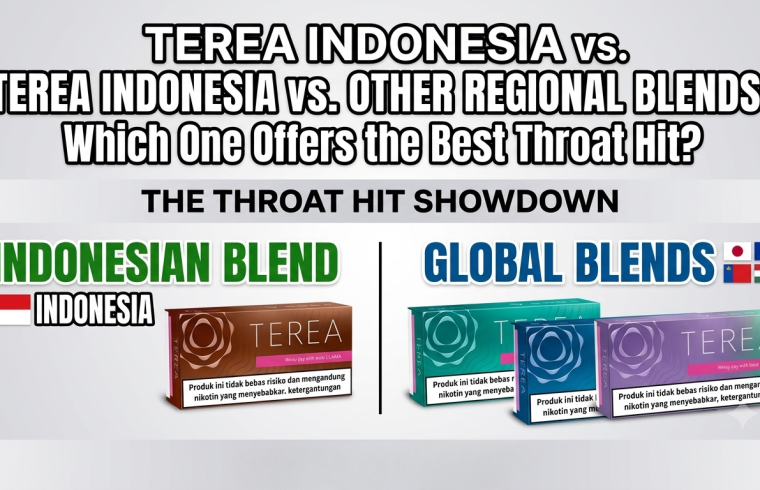
If you have ever taken a drag from a cigarette rolled with Indonesian tobacco, you already know what I am talking about. There is something about that thick, earthy, almost smoky richness that hits different. It is not subtle. It is not light. It is bold, full-bodied, and absolutely intentional. Indonesian tobacco has built its reputation over decades on exactly that kind of raw intensity, and now that same DNA has made its way into the IQOS Terea ecosystem in a way that genuinely turns heads.
I want to dig into this properly today because there is a lot of noise out there about regional Terea blends, and most of it stays surface level. Southeast Asian users, especially those who grew up smoking kreteks or strong local tobacco, have very specific expectations when they switch to a heated tobacco system. They want throat hit. They want depth. They want something that does not feel like a watered-down compromise. So the real question is: does Terea Indonesia actually deliver on that, or is it just marketing riding on the reputation of Indonesian tobacco culture?
Let me walk you through what I have found.
Why Indonesian Tobacco Has Always Been Different
Indonesia is the fifth largest tobacco producer in the world, and the style of tobacco grown there has always leaned toward the stronger, more aromatic end of the spectrum. Kretek cigarettes, which blend tobacco with cloves, became a cultural staple precisely because Indonesian smokers developed a taste for full flavor experiences. The throat hit from a proper kretek is not harsh in a cheap way. It is warm, complex, and deeply satisfying in a way that milder tobacco simply cannot replicate.
When PMI started developing regional Terea variants for Southeast Asia, they were clearly working with this consumer baseline in mind. You cannot hand a lifelong Indonesian smoker a mild Nordic-style stick and expect them to stick around. The blend had to reflect local expectations, and that is exactly what the Indonesian lineup attempts to do.
What Makes Terea Indonesia Sticks Stand Out
The Terea Indonesia range includes variants that sit on the bolder end of the Terea flavor spectrum. The robust richness of Terea Indonesia sticks makes them a top choice for seasoned users who are used to full-bodied tobacco experiences and find lighter options unsatisfying.
The Indonesian variants tend to carry a naturally heavier tobacco character, with what I would describe as a dry, almost woody undertone layered beneath the primary tobacco note. There is less of that floral or light grain quality you get in Japanese or European variants, and more of a direct, grounded intensity.
Throat hit specifically: This is where the Indonesian Terea sticks genuinely shine for the right kind of user. The hit is not aggressive or chemical-feeling. It is smooth but present, which is actually quite difficult to achieve in a heated tobacco format. Many users who struggle with European Terea variants feeling too mild report that the Indonesian blends give them that familiar feedback that signals a satisfying session.
Cooling effect: Some Indonesian variants, particularly those in the Dimensions-adjacent lineup, incorporate a mild cooling element that rounds out the experience without drowning the tobacco character. It is not the same as the aggressive menthol of something like a Terea Silver, but rather a subtle finish that prevents the overall experience from feeling heavy or stale. For people who find straight tobacco TEREA sticks a bit flat, this mild cooling can add just enough dimension without compromising the intensity.
Comparing Indonesian Terea to Other Regional Blends
This is where things get interesting, because the Southeast Asian market actually has quite a few regional Terea offerings, and they are not all created equal for every palate.
Japanese Terea variants are widely regarded as technically excellent, particularly in terms of consistency and aroma quality. But they skew lighter. The Japanese market’s preferences lean toward delicate tobacco notes, sometimes with green tea or floral undertones, and the throat feedback is noticeably softer. For someone coming from Indonesian tobacco culture, Japanese variants often feel incomplete. They are not bad sticks by any means, but they are built for a different sensory expectation.
Malaysian and Filipino market variants tend to sit in a middle ground. They are stronger than the Japanese lineup but generally do not reach the full intensity of the Indonesian offerings. Some users from these markets actually prefer this midpoint, but dedicated intensity seekers usually find they are still reaching for something more.
Middle Eastern variants are interesting because the regional preferences there also lean toward stronger tobacco, and there is some overlap in the flavor profile. However, the Middle Eastern variants often carry a slightly different aromatic character, sometimes more amber or dried fruit influenced, whereas Indonesian variants stay truer to a raw, unembellished tobacco profile.
European variants, particularly the standard IQOS lineup widely available globally, are designed for mass market appeal. They are balanced and accessible, but they deliberately avoid anything that could feel intense or polarizing. For casual users this works perfectly. For someone who wants genuine throat satisfaction, they often fall flat.
The bottom line from a pure throat hit comparison: Indonesian Terea variants consistently come out on top for users who want that sensation to be central to the experience, not an afterthought.
Who Should Be Choosing Indonesian Terea
I want to be honest here rather than just recommending these sticks to everyone, because they are genuinely not for every user.
If you are a lighter smoker who switched to IQOS for the reduced-intensity experience, Indonesian Terea sticks might actually feel too assertive. The whole point of them is to not back down from the tobacco character, and users who prefer mild or smooth profiles might find them a bit much.
But if you are a seasoned tobacco user, especially someone from a culture where strong tobacco is the norm, or someone who has been going through regional variants trying to find something that actually feels satisfying, Indonesian Terea sticks are worth your serious attention. They were designed with you in mind.
Active smokers in the process of transitioning from combustion cigarettes to heated tobacco tend to have the highest satisfaction rates with Indonesian variants specifically because the sensory feedback is close enough to what they are used to that the adjustment feels manageable rather than like a total compromise.
Where to Actually Get Them
One thing worth mentioning is that availability can be inconsistent depending on where you are. Indonesian Terea variants are not always stocked at every local retailer, and the specific variants can rotate. For people outside Indonesia who want access to the full range or who want to shop alongside international inventory, they are readily sourced alongside international inventory on the Terea website, which carries the Indonesian lineup along with variants from other regions.
This is genuinely useful if you are someone who likes to compare blends or wants to keep a steady supply without depending on local stock availability.
Final Thoughts
Indonesian tobacco’s reputation for bold, full-flavored experiences is not an accident. It is the product of a deep cultural relationship with tobacco that prioritizes real flavor over subtlety. The Terea Indonesia lineup respects that heritage and translates it reasonably well into the heated tobacco format.
Is it perfect? Nothing is. Some hardcore kretek fans will still feel the format cannot fully replicate what they are used to. But within the IQOS ecosystem, the Indonesian variants are about as close as it currently gets to a genuinely satisfying, throat-forward experience.
If you have been settling for something lighter and walking away from each session feeling like it was almost right but not quite, Indonesian Terea sticks are the most logical next step to try. The regional blends have their merits, but for throat hit as the primary measure, Indonesia holds the lead.